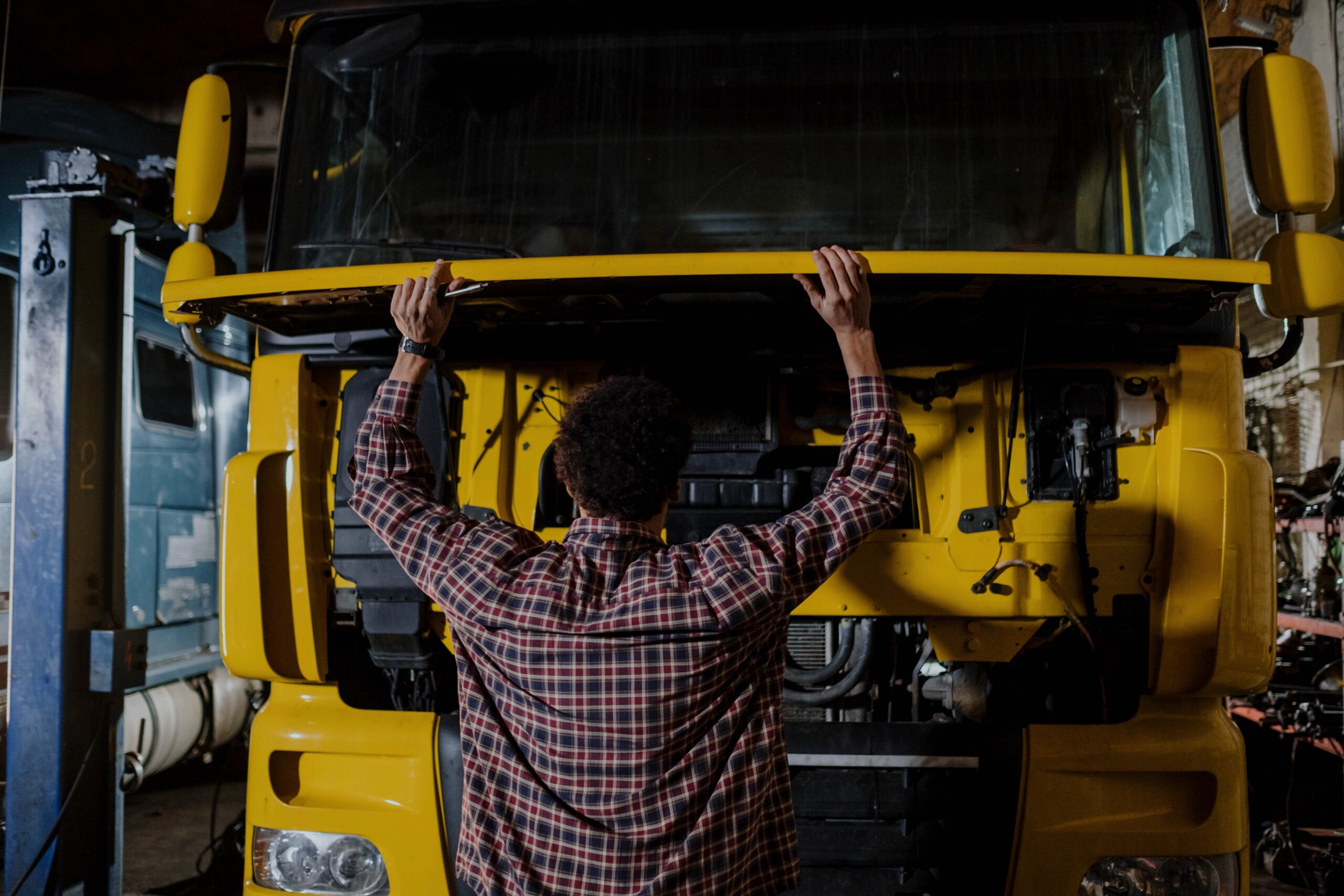
Think you’ve got an issue with your drivetrain? It’s a critical system that acts as a liaison between your engine and wheels. If something isn’t working with your drive train components, you could experience more wear and tear, or even engine failure.
Whether you’re just trying to change your truck’s transmission fluid or want a closer look at the middleman that helps keep your engine and wheels working, you’ll need to know the different components of your drivetrain system.
Doing so will help you make more informed decisions that can save you money, time, and stress on your rig. If you’re looking to learn more about your truck’s drive train components, you’ve come to the right place.
In this article, we’ll cover the six key drive train components that help keep your truck moving and grooving wherever life takes you.
Table: The drivetrain consists of 6 key components

|
1. The transmission (the middleman)
The two types of transmissions include:
- Manual transmissions
- Automatic transmissions
The transmission acts as the middleman between your engine and your wheels. As your truck’s middleman, the transmission helps manage gear ratios and transfer power to your wheels.
For example, automatic transmissions use hydraulic systems and other types of mechanisms to help convert torque. In contrast, manual transmissions require a driver to adjust a gear stick in the driver’s compartment to shift gears in the truck.
Both automatic and manual transmissions provide different driving experiences, and both help keep a truck moving in the right direction, forward.
2. The driveshaft (the connector)
Another one of the key components of the drive train is the driveshaft. The driveshaft acts as a connection point between the transmission and the differential. This helpful drive train component transmits rotational power from the engine to the wheels.
The driveshaft also helps connect key components like the axles and transmission.
3. The differential (the support crew)
A differential is key to helping each wheel rotate at different speeds when turning the vehicle. The differential keeps one wheel rotating at a different speed than the other, on the same axle, to help enhance stability and keep tires in solid condition.
This key component acts like a support crew, helping both wheels to rotate at different speeds to ensure a better driving experience.
4. The transfer case (power splitter)
One of the components that work together with the drivetrain is the transfer case. The transfer case distributes power between the front and rear axles.
Ultimately, the transfer case monitors how power is split between the axles of a truck.
5. The axles (the backbone and legs)
One of the most helpful drivetrain parts includes the axles. The axles connect the wheels to the differential.
Since the differential helps distribute power to the wheels, the axles help the wheels move, acting as the legs of the vehicle.
Some of the most common axle types include:
- Independent axles
- Semi-floating axles
- Solid axles
6. The clutch (manual transmission vehicles) or torque converter (automatic transmission vehicles)
The clutch and torque converter are similar to fans that help engage the engine and transmission.
In manual transmission-based vehicles, the clutch engages and disengages the engine from the transmission. Using a small pedal to the left of the brake and accelerator pedals, the clutch pedal is pushed to engage the vehicle.
When the clutch pedal is depressed, the driver can shift gears more smoothly. When a driver lets go of the clutch pedal, the clutch engages the transmission and transfers power to the wheels.
In contrast, we have automatic transmissions, which use a torque converter. Torque converters use fluid to transmit power from the engine to the transmission, thereby eliminating the need for a clutch pedal to engage the engine.
Certified facts about drive train components

Did you know that an average big rig carries 40 tons? That’s 80,000 pounds!
You can thank your drivetrain for keeping you going. For more Certified facts about trucks, check out our Instagram page here.
Need drivetrain components repaired on your truck?

If you need drivetrain or powertrain components repaired on a diesel-powered vehicle, the good news is that the market for drivetrain components is likely to hold steady, according to recent data trends and market research.
If you find yourself in the South Florida region and need a second pair of eyes on your power or drivetrain, we’re here to help. Our ASE-certified diesel technicians have more than 25 years of experience diagnosing, troubleshooting, and repairing drivetrains large and small for all kinds of trucks.
Whether you own a light-duty, medium-duty, heavy-duty, or semi truck, our team has the knowledge, experience, tools, and technology to get you up and running fast.
To schedule an in-shop repair or mobile repair service appointment (yes, we can come to you!), contact us today.
Certified Fleet Services: We Get Your Rig Up and Running Fast