Fleet managers and operators: your trucks are one of your business’s most valuable assets. You’d best bet that conducting planned preventive maintenance is essential to keeping your business alive and profitable.
The question is how planned preventive maintenance differs from regularly scheduled maintenance. And why is being proactive about both essential to the vitality of your fleet and business?
While the two maintenance methodologies complement each other, with planned preventive maintenance leading the charge and scheduled maintenance following in its footsteps, planned preventive maintenance differs in that it identifies the tasks that need to be done and how they should be executed.
Both regularly scheduled maintenance and planned preventive maintenance work together. If you’re wondering how to ensure the alignment of your truck and fleet team with preventive maintenance, you’ve come to the right place.
In this article, we’ll discuss:
- The pros and cons of planned preventive maintenance and regularly scheduled maintenance
- What’s included in planned preventive maintenance and regularly scheduled maintenance — and key examples of both
- The benefits of implementing a planned preventive maintenance and regularly scheduled maintenance schedule for fleet teams
- The role of a quality diesel truck fleet repair team in a fleet’s maintenance schedule
- Frequently asked questions (FAQ) about planned preventive maintenance
Table: Pros and cons of each predictive maintenance type
| Maintenance Type | Pros |
Cons |
| Planned preventive maintenance | – Reduces the risk of equipment failing
– Its purpose is to determine which tasks are most important to complete and how – Extends equipment lifespan by identifying key issues – Improves fleet reliability by helping teams prioritize which work to do and when. |
– Planned preventive maintenance involves careful planning
– Can involve upfront costs for long-term gains – May lead a fleet team to conduct unnecessary maintenance, that is, if the planned maintenance isn’t informed by data and a reliable fleet management strategy |
| Regularly scheduled maintenance | – Often has a clear schedule attached to each task needing improvement
– Helps trucks stay compliant with DOT authorities – Can provide predictability for critical equipment that needs to be used |
– Is often based on a truck’s mileage or time-based maintenance schedules.
– May not always catch hidden wear and tear or problems that can arise in the early stages of a malfunctioning aspect of the equipment – Routine maintenance doesn’t account for one-off, emergency issues that can arise with equipment |
What’s included in planned preventive maintenance?

You might be wondering, “It all looks like maintenance to me. What’s the difference between planned preventive maintenance and other types of maintenance?”
Planned preventive maintenance involves creating a customized roadmap for keeping your fleet healthy. Instead of reacting when problems arise, fleet managers and teams can anticipate issues before they lead to equipment failure.
The result? A more profitable, nimble, and operational fleet team.
A preventive maintenance plan usually includes:
- Conducting detailed inspections: Regular preventive maintenance involves checking all aspects of a fleet, such as tires, brakes, steering, exhaust systems, and electrical components.
- Monitoring fluids: Beyond oil changes, planned preventive maintenance can support the healthy management of coolant levels, hydraulic fluids, DEF (diesel exhaust fluid), and transmission fluids, all in the service of preventing oil leaks and potential issues in truck systems.
- Replacing and repairing components: Changing filters, belts, or parts before failure based on usage patterns and manufacturer recommendations.
- Checking key systems for repairs: Fleet technicians use preventive maintenance to monitor wear and tear and other key performance indicators (KPI) to predict when a truck could fail.
- Safety and compliance reviews: Ensuring your fleet meets DOT standards and emissions requirements.
Unlike scheduled maintenance, conducting preventive planned maintenance involves asking larger questions, such as “Which components need replacing? What needs to be inspected today? How can we prevent today’s problems tomorrow?”
A diesel fleet repair team can help walk you through each system and make necessary repairs so you can avoid unplanned downtime. If you need help with preventive maintenance, feel free to reach out to your local diesel repair team.
What are examples of planned preventive maintenance?
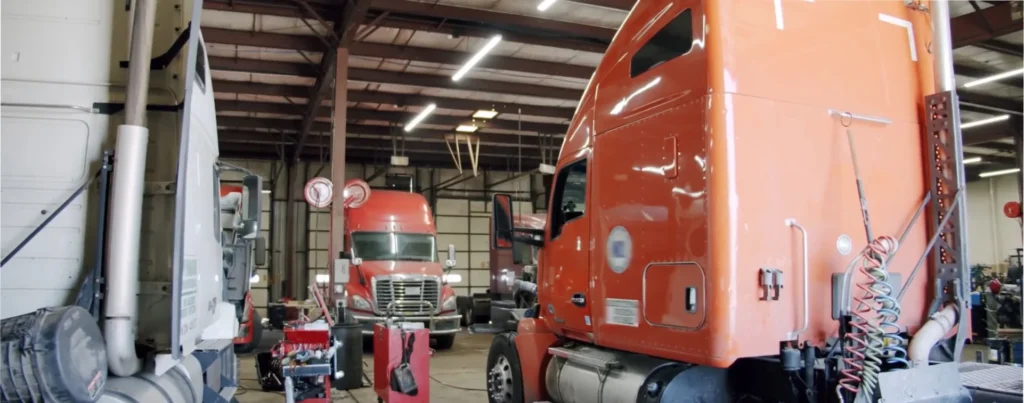
Now that we understand what planned preventive maintenance involves, what does it look like in action? Examples of planned preventive maintenance tasks for diesel trucks and fleet vehicles include:
- Replacing a serpentine belt before it reaches its wear limit and doing so based on engine hours rather than miles.
- Scheduling tire rotations when a tire’s tread depth shows uneven wear
- Performing fuel system cleanings during planned downtime to prevent the injector from clogging.
- Inspecting turbochargers for excess heat or vibration
- Replacing batteries or alternators before winter’s cold weather strikes. Doing so helps reduce the chance of engine-start failures.
Planned preventive maintenance blends proactive maintenance strategies with key information communicated from the vehicle. In contrast, we have regularly scheduled maintenance.
What’s included in scheduled maintenance?
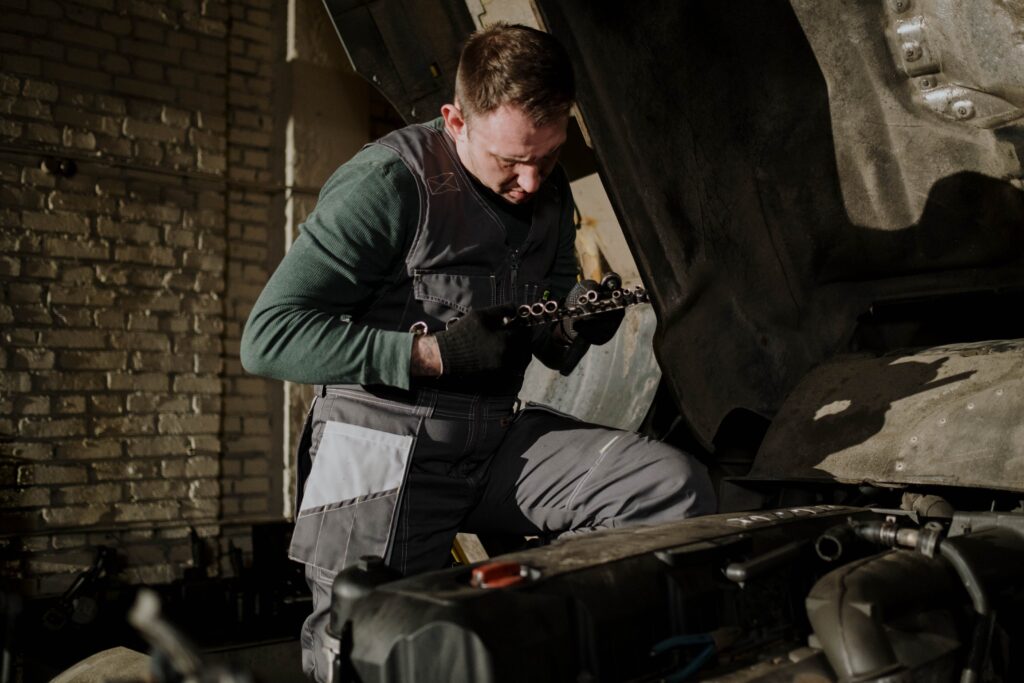
Regularly scheduled maintenance is the heart of a quality fleet care program. The difference between preventive planned maintenance and regularly scheduled maintenance is that scheduled maintenance tasks occur at predetermined intervals.
Usually, these tasks are completed based on a vehicle’s mileage, engine hours, or time spent driving on the road.
Common scheduled maintenance tasks include:
- Oil and filter changes every 10,000–15,000 miles (or per manufacturer guidelines)
- Brake inspections at regular service intervals
- Coolant flushes every set number of miles or years.
- Tire rotations and alignments conducted at fixed schedules
- Transmission servicing after a certain number of miles driven or time spent on the road
While scheduled maintenance ensures compliance with warranties and industry standards, it’s limited in its scope. Performing maintenance at regular intervals doesn’t always take into account the context of the vehicles and where the vehicles work.
For instance, a truck hauling heavy loads in stop-and-go city traffic may need more frequent brake servicing than the same model driving freeway routes.
In fact, scheduled maintenance is most effective when paired with planned preventive maintenance.
Maintenance personnel should familiarize themselves with maintenance tasks that need regular maintenance versus preventive maintenance. Doing so will help them prevent equipment failures and ensure optimal equipment performance.
The difference between preventive maintenance versus scheduled maintenance
So, what’s the difference between planned preventive maintenance and scheduled maintenance? Planned preventive maintenance tackles the “what” and “how” of fleet repair work. Planned preventive maintenance creates a targeted strategy tailored to each vehicle and each vehicle’s unique issues.
On the other hand, scheduled maintenance mostly deals with the “when.” It ensures consistent service at predictable intervals.
For fleets, the best approach is combining both methods: scheduled service for consistency, and preventive planned maintenance for longevity and reduced downtime.
Especially as the demand to optimize fleets continues to grow over the next decade, we’ll likely see the market for fleet maintenance service grow (WiseGuyReports.com, 2024).
Fleet owners: the more you can optimize your fleet with planned, predictive, and scheduled maintenance, the more likely you’ll be able to tap into the profitability of the growing fleet maintenance service market.
And that’s just one benefit of conducting planned preventive and scheduled maintenance.
Benefits of planned preventive and scheduled maintenance

When a fleet optimizes maintenance protocols and maintenance tasks based on a healthy, preventive planned maintenance with scheduled maintenance, the team can benefit a great deal. Some of the benefits of including planned preventive and scheduled maintenance together include:
- Reduced vehicle downtime: Catching minor issues before they become emergencies can keep fleets moving.
- The cost of repairs is less: A $300 preventive engine repair often prevents a more expensive engine replacement.
- Truck life can be extended: Proper fleet care means your diesel trucks last longer.
- Improved safety: Routine maintenance and inspections help prevent brake failures, tire blowouts, and other issues on the road.
- A more compliant fleet: Staying on top of DOT requirements means you stand a greater chance of reducing fines and delays.
- Higher vehicle resale value: When you’ve conducted and documented preventive maintenance, your vehicle can sell for a higher value.
Proactive maintenance is a little upfront investment for a huge long-term gain. Save money and time with proactive planned and scheduled maintenance.
Ways to implement planned preventive maintenance and scheduled maintenance
With all this information, you might be thinking about how to implement a well-executed planned preventive maintenance and scheduled maintenance operation. We recommend starting small and then growing your operation.
Here’s how to set your fleet up for success:
- Build a preventive maintenance checklist for every truck in your fleet.
- Use maintenance software to track specific maintenance tasks, inspections, repairs, service history, and more.
- Schedule downtime strategically by coordinating maintenance needs when the vehicle isn’t needed.
- Train drivers to report issues early.
- Review vehicle performance data often, and adjust your maintenance plan as vehicles age.
Need help with planned preventive maintenance schedules? Choose a Certified professional.

Even the most proactive fleet manager can’t manage a fleet alone. That’s where a certified diesel truck service team comes in handy. Professional diesel truck repair technicians bring expertise in:
- Diagnostic testing and predictive maintenance tools
- Manufacturer-specific preventive maintenance requirements
- Handling repairs efficiently so trucks return to the road faster
- Building customized maintenance schedules that balance cost with performance
Choosing a trusted fleet repair team means you’ll receive more than a technician who can help troubleshoot breakdowns. You’ll have a partner for the lifetime of your fleet vehicles, a partner with 25+ years of experience in the diesel repair industry.
If you’re looking for help with tweaking your preventive maintenance processes for your fleet, or if you’re looking for regular inspections and maintenance for your fleet, give any of our three locations a call. We’d be happy to help!
Maintenance helps fleets thrive. We see fleets day in and day out that thrive after receiving the right care (check out our Instagram page to see it for yourself). Can we help?
To ensure your truck rides long and strong with quality fleet maintenance, contact us today.
Frequently asked questions (FAQ) about planned preventive maintenance
1. Why is preventive maintenance for trucks important?
Preventive maintenance helps reduce breakdowns, extends equipment life, and saves money long-term for fleet operators and managers.
2. How do preventive, planned, and scheduled maintenance differ?
Here’s a quick look at how each of these maintenance services differs.
- Preventive maintenance is a fleet strategy that prioritizes proactive care of a fleet.
- Planned preventive maintenance prioritizes specific tasks designed around each vehicle’s needs.
- Scheduled maintenance involves tasks performed at fixed intervals.
3. When should preventive maintenance be conducted for my diesel trucks?
The answer depends on a few factors, such as vehicle usage, load types, and operating conditions. Most fleets combine mileage-based schedules with condition-based inspections.
4. Where can I get preventive maintenance for my truck?
Certified diesel truck repair shops and fleet service providers offer preventive maintenance programs tailored to your needs. For example, we offer in-shop repairs and mobile truck repairs (in other words, we can come and fix your vehicle at your location).
5. How often should I bring my truck in for maintenance?
The answer depends on the type of vehicle you drive, how often you drive it, in what conditions, and your risk threshold for repair work. We always recommend reaching out to your maintenance provider, as they can recommend a plan specific to your operation.
Certified Fleet Services: Getting You Back on the Road Faster